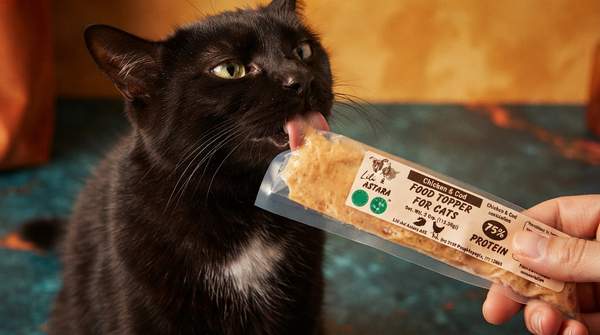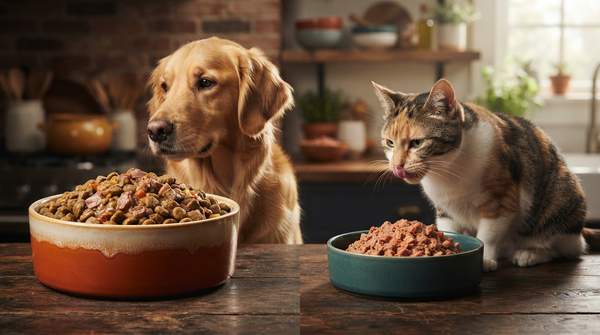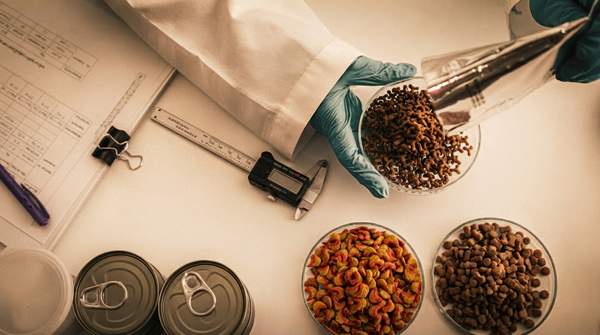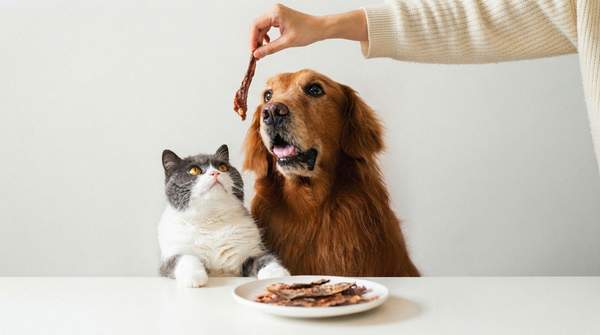
Pet food palatability is not an accident — it is engineered. Manufacturers manipulate three sensory inputs, aroma, taste, and texture, to match the distinct biology of dogs and cats. The broad strokes are simple: smell does the initial attracting, taste does the secondary evaluation, and physical form decides whether a pet actually commits to eating. But the details diverge sharply by species, which is why a food that delights a dog can be ignored by a cat.
The Science of Pet Food Palatability: An Overview
Palatability describes how readily an animal accepts and consumes a food, and it rests on three interconnected sensory dimensions. As Scott McGrane, PhD, of Mars Petcare's Waltham Petcare Science Institute wrote in the journal Advances in Small Animal Care, "Macronutrient balance, protein hydrolysates, taste and aroma compounds, kibble shape, food texture, temperature, and ingredient quality all strongly influence pet food palatability." That list captures the two halves of the engineering problem: the chemistry inside the food and the physical way it is processed, presented, and consumed. Both must align with a species' sensory equipment and nutritional instincts for a food to succeed.
Aroma: The First Attraction for Pets
Smell is the opening move in food selection, and pets are spectacularly equipped for it. Dogs possess roughly 300 million olfactory receptors, compared with about 6 million in humans; cats carry around 200 million. With that hardware, olfactory stimulation becomes the dominant factor in food selection, which is one reason aroma-focused palatability enhancers often outperform those aimed at taste alone. Olfaction has been central to canine preference research for years: in experiments by Pétel and colleagues, dogs given two identical foods over hidden odorant compartments chose first, and ate more of, the food covering the more palatable odorant. Aroma is not decoration; it is the gatekeeper of appetite.
Taste: Distinguishing Canine and Feline Preferences
Taste is the second evaluation, and here the species split begins. Dogs have approximately 1,700 taste buds and cats only about 470, against roughly 9,000 in humans. Cats, as true carnivores requiring a high-protein diet built around animal-based proteins, are also highly sensitive to bitter compounds and may reject foods containing even small amounts of them. Dogs carry a more tolerant palate, less sensitive to bitterness and broader in its preferences, which is why canine formulations can wander further from a strict nutrient profile. Macronutrient balancing acts as a longer-term driver of food selection, layering on top of the immediate sensory response.
Texture and Physical Form: Beyond Flavor
Physical form is where many formulations quietly fail. A review published in Animal Feed Science and Technology found that sharp-edged kibbles may be less preferred by cats because they are uncomfortable to grasp or chew — a reminder that cats judge food with their paws and mouths before their tongues. The same research highlights a practical limitation of broad ingredient labels: two foods may both contain chicken, fish, or yeast, yet differ greatly in palatability because processing produces different mixtures of volatile and taste-active compounds. Texture, temperature, and shape are not afterthoughts; they are part of the palatability system.
Comparative Palatability Drivers for Dogs and Cats
Putting the evidence side by side shows why single recipes are always a compromise across species. Cats prefer roughly 52% protein, 36% fat, and 12% carbohydrate when given dietary choices, while dogs select toward higher fat — about 63% fat, 30% protein, and 7% carbohydrate. The table below contrasts the documented drivers for each species.
| Species | Sensory Driver | Key Palatability Factors |
|---|---|---|
| Dogs | Olfaction is a key driver of food selection; roughly 300 million olfactory receptors. Research in Animal Feed Science and Technology found benzaldehyde, vanillin, and 2,5-dimethyl pyrazine enhanced a dog food attractant. | More tolerant palate; less sensitive to bitter tastes than cats, with broader taste preferences. Select toward higher fat (about 63% fat, 30% protein, 7% carbohydrate). |
| Cats | Olfactory stimulation is the dominant factor in food acceptance; around 200 million olfactory receptors. Smell provides the initial attraction. | True carnivores preferring high protein and animal-based proteins (about 52% protein, 36% fat, 12% carbohydrate). Highly sensitive to bitter compounds and may reject foods with even small amounts. Kibble shape, size, and texture significantly influence acceptance; sharp-edged kibbles may be avoided. |
The comparison clarifies why "all-life-stages" or cross-species foods are compromises: a fat-forward aroma profile tuned for a dog's nose and tolerant palate will not satisfy a cat's protein-driven macronutrient instinct, its bitterness vigilance, or its pickiness about kibble geometry.
How Manufacturers Engineer Appeal: Hydrolysates and the Maillard Reaction
Two techniques do much of the practical work. Protein hydrolysates enhance palatability by breaking proteins into smaller peptides and amino acids that improve both taste and aroma cues in the food — effectively pre-digesting flavor into forms pets detect readily. The Maillard reaction, the same browning chemistry that gives cooked meat its savory character, generates the roast-like aromas that make processed foods smell like fresh-cooked meals. McGrane notes these distinctions matter most when manufacturers develop therapeutic diets, alternative-protein products, or recipes that depart from an animal's preferred nutrient profile — exactly the situations where palatability engineering has to compensate for a formulation pets would otherwise refuse.
Informed Pet Food Choices
Pet owners can make more informed food choices by understanding the distinct scientific principles that drive palatability for their specific pet. For a dog, that means expecting fat-rich aromas and a wide tolerance for flavors to do the persuading; for a cat, it means high animal protein, minimal bitterness, and comfortable physical form. The observable test is straightforward: watch whether the pet consistently consumes the food with enthusiasm and maintains good health, which signals the formulation aligns with its species-specific sensory and nutritional needs. If a cat sniffs and walks away, the evidence suggests checking the kibble's shape and the recipe's protein level before blaming pickiness — and if a formulation departs from a species' preferred nutrient profile, palatability engineering is what determines whether the bowl comes back empty.