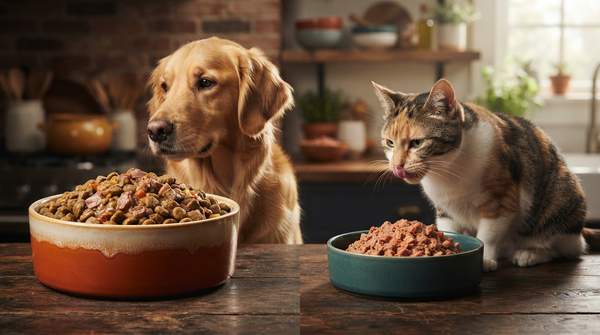
Pet food is engineered twice over: once for nutrition and once for the nose, tongue, and mouth of a species with sensory priorities very different from ours. A dog's decision to eat begins largely with smell, while a cat's is shaped more strongly by taste and texture—and a cat cannot even detect sweetness. Understanding those differences, and how manufacturers test for them, turns vague label claims like "irresistible flavor" into something a pet owner can actually evaluate.
The Science of Appeal: Understanding Pet Food Palatability
Palatability, in the technical sense, refers to how enjoyable an animal finds the taste of its food, determined by sensory qualities like taste, flavor, and texture, as pet industry testing specialists at BSM Partners explain. It matters for more than picky eating: researchers writing in the journal Animals note that a palatable product is essential for pets to feed themselves—and even more so for animals with health issues whose daily nutritional requirements depend on actually finishing the meal. Palatability also ranks as a main purchase criterion for owners, which is why so much engineering effort goes into the bowl.
Distinct Sensory Worlds: Dogs vs. Cats
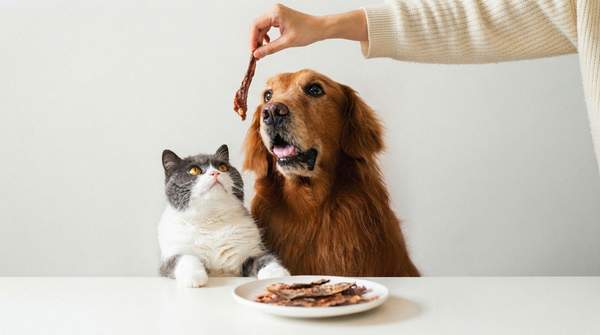
The two species we feed most share a house but not a sensory agenda. A review in PMC on dry pet food flavor enhancers notes that for pets, aromas perceived orthonasally—the smell that reaches the nose before eating—may drive initial preference, while consumption is dictated more by overall flavors, the retronasal odors released while chewing. Dogs' preferences are driven by their ancestral history: as descendants of wolves, they tend to prefer meat-based diets over cereal-based ones, prefer beef most, followed by lamb and chicken, and favor moist or semi-moist foods over dry kibble.
Cats, by contrast, are obligate-type feeders with distinct limits. Research on palatability drivers cites a study by Hewson-Hughes and colleagues in which cats self-selected diets averaging 52% protein and 36% fat by metabolizable energy, and displayed a carbohydrate ceiling of roughly 300 kJ (about 72 kcal) per day. That low carbohydrate appetite is likely tied to sensory and metabolic adaptations—including their inability to detect sweetness due to lacking sweet taste receptors.
Engineering Aroma: The First Impression
Because odor is of higher importance to dogs, aroma is where manufacturers invest heavily for the canine market. Palatants—the flavor coatings sprayed onto kibble after extrusion—are a core tool. The American Veterinary Medical Association reports that palatants make up about 1%–3% of the diet and often come as liquid or dry forms derived from fermented ingredients. Aroma chemistry is so central that flavor ingredient developers describe investigating palatability "at the molecular level."
The workhorse of savory aroma is the Maillard reaction, the same chemistry that browns roast meat and toast. Palatability researchers at Kemin's Nutrisurance team develop proprietary Maillard techniques to obtain reaction flavor profiles that appeal to both cats and dogs—aroma engineering is not exclusively a canine affair, even if dogs are the more scent-driven audience. For both species, the coating is where much of the first impression is won or lost.
Targeting Taste: Beyond Sweetness
Taste engineering splits sharply along species lines. A dog's willingness to eat leans savory and meaty, consistent with its carnivore ancestry; texture and moisture add to the appeal. Cats, lacking sweet receptors entirely, respond instead to other taste modalities. Recent research cited in the palatability-driver review indicates that kokumi—the sensation that enhances sweet, salty, and umami tastes—is important for carnivores and is associated with the palatability of meat-derived compounds such as amino acids and peptides. The calcium sensing receptor, the putative kokumi receptor in humans, is also expressed in cats' circumvallate papillae, giving formulators a concrete biological target.
This is why a palatant that delights a dog may leave a cat cold: the two animals are literally tasting different versions of the same food. The pet food trade press reports that understanding how dogs and cats integrate taste, aroma, and texture in their perception of flavor could help formulators develop targeted products—an area expected to grow in importance as alternative proteins and sustainable ingredients enter formulations.
The Role of Texture and Mouthfeel
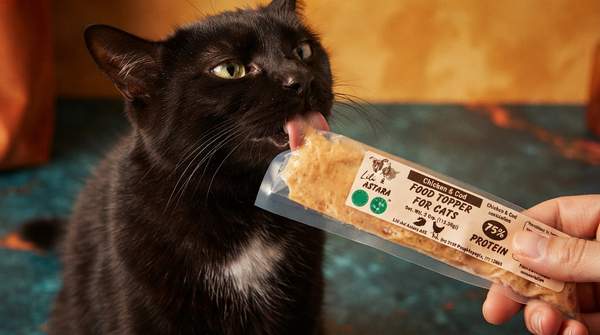
Texture is of greater importance to cats, while odor is of higher importance to dogs, according to Abby Castillo, global palatant product manager at Kemin Industries, speaking to Pet Food Processing. That single sentence reframes most cat-owner frustrations: a cat refusing a new food is often rejecting mouthfeel, not flavor. Moisture is part of that equation, which helps explain the documented canine preference for moist or semi-moist foods over dry kibble, whose flavor appeal is naturally lower.
Human sensory panels quantify these physical attributes with a defined lexicon—terms like "cohesiveness of mass" and "crispness"—alongside aroma descriptors such as "barnyard," "brothy," "toasted," and "oxidized oil." Processing choices, from cooking temperature to kibble shape, feed directly into these measurable properties.
Comparative Sensory Drivers and Engineering Strategies for Pet Food Palatability
The table below compares the two species across the three sensory dimensions and maps each to the manufacturing strategy that targets it—so you can see at a glance why one food succeeds for a dog and fails for a cat.
| Sensory factor | Dog | Cat | Manufacturer strategy |
|---|---|---|---|
| Aroma (orthonasal smell) | Odor is of higher importance; smell drives first approach to the bowl | Less scent-driven, but aroma still encourages approach and consumption | Palatant coatings (1%–3% of diet) using Maillard-reaction savory flavor profiles |
| Taste | Meat-based preferences; favors beef, then lamb and chicken | Cannot detect sweetness; carbohydrate ceiling near 72 kcal/day; responsive to kokumi/meat-derived amino acids and peptides | Meat-derived palatants from fermented ingredients; umami- and kokumi-oriented formulation |
| Texture and mouthfeel | Prefers moist or semi-moist foods over dry | Texture is of greater importance; mouthfeel strongly shapes acceptance | Moisture level, kibble processing, and form tuned to species expectations |
Read the table as a diagnostic: if a dog ignores a food, question the aroma first; if a cat does, question texture and taste before blaming the smell.
Measuring Palatability: Industry Testing Methods
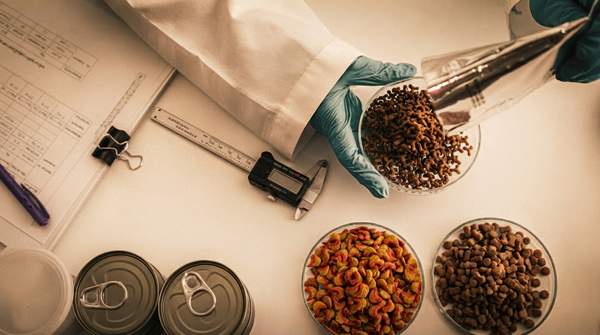
How do companies know a food is "preferred"? The most common animal test is a paired comparison—two bowls offered simultaneously, with consumption as the key measure of palatability. Monadic testing, a single bowl offered alone, provides additional information, Castillo explains. These protocols serve purposes from marketing research to new product development and quality control.
Because pets can't give verbal feedback, human expert panels bridge the gap. BSM Partners describes trained panels using a defined lexicon to evaluate appearance, aroma, texture, and flavor—words like "brothy" and "toasted"—offering quantitative, predictive insight into how processing and ingredient changes affect palatability. Humans perceive taste differently than pets, but panel analysis serves as a proxy for consistency before animal testing begins. Caregiver perception matters too: a sensory-measurement review notes the Pet Eating Enthusiasm Emoji Scale, developed by Hill's Pet Nutrition with pet owners, to objectively quantify cats' and dogs' eating enthusiasm.
Making Informed Choices for Your Pet's Palate
When selecting pet food, consider your pet's species-specific sensory biology—aroma for dogs, taste and texture for cats—and how manufacturers engineer those factors, rather than relying solely on general "flavor" claims. Note what the claim is actually measuring: a two-bowl consumption test says more than an adjective on the bag, and a texture change may matter more to a cat than any flavor swap.
As your measurable indicator, observe your pet's initial interest—sniffing and first choice of a bowl—and their sustained consumption over time when introducing a new food. If that pattern aligns with the known species preferences above (aroma for dogs, texture and umami-style taste for cats), the food's engineering is doing its job; if not, the Maillard coating and the kibble's mouthfeel are the first levers worth reconsidering.
Sources
- BSM Partners // The Palatability Puzzle: New Innovations Unlocking Pet Preferences — Bsmpartners
- Drivers of Palatability for Cats and Dogs—What It Means for Pet Food Development - PMC
- Taste as a tool — American Veterinary Medical Association
- Importance of Aroma in Pet Food Palatability — KEMIN
- Understanding the science behind pet food palatability — Petfoodprocessing
- MDPI
- Measuring palatability of pet food products: Sensory components, evaluations, challenges, and opportunities - PMC