Here's the thing most people get wrong about the non-alcoholic beverage market: it isn't about quitting drinking. It's about choice. I've been digging through the market research, and the picture that emerges is a category growing fast on two engines—moderation-minded consumers who still buy alcohol, and wellness seekers who want drinks that do more than taste good.
The scale is genuinely contested. Different research firms publish different valuations of the global market, and those numbers don't line up neatly. Why? Largely because they aren't measuring the same thing.
And the innovation story splits cleanly into two strategies. That framework—direct alternatives versus designer alternatives—is the lens I'll hand you for decoding every new bottle that lands on a shelf.
The Exploding Non-Alcoholic Beverage Market: Scale and Growth
How big is this market? Depends on who's counting—and what they count.
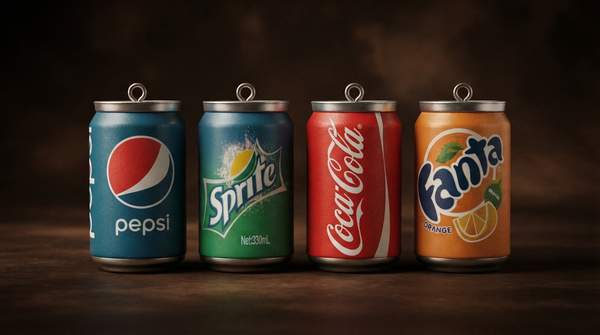
Grand View Research's Consumer & F&B team covers the non-alcoholic beverages market with an expansive lens. Its roster of key U.S. players tells the story: Nestlé, PepsiCo, Unilever, Keurig Dr Pepper, The Coca-Cola Company, Jones Soda, Danone, Suntory, Asahi, and Red Bull. That's not a beer-and-wine list. That's sodas, juices, dairy-based drinks, energy drinks, coffees, and teas. When your definition sweeps in that much of the drinks aisle, your headline valuation balloons.
Contrast that with Fact.MR's approach. Its related low-alcohol beverages analysis segments the market by type—beer, wine, RTD and cider—plus distribution channel, packaging, alcohol strength, and consumption occasion. Narrower scope. Different product universe. A valuation built on that perimeter simply can't be compared one-to-one with the broader figure.
So when you see conflicting market size numbers—and you will—resist the urge to pick a winner. The discrepancy is mostly definitional. One firm's "non-alcoholic beverage market" includes dairy giants; another's focuses on alcohol-adjacent categories like beer and cider.
What's not in dispute is direction. Demand for alcohol-free options is climbing, and the growth pockets are specific. Europe is a standout: studies cited by Grand View Research indicate that 71% of European consumers were reducing or limiting alcohol consumption as of 2025, with younger consumers leading the moderation shift and boosting demand for alcohol-free beer, wine, and mocktails.
Where's the runway? Under-penetrated regions and new distribution models are the opportunity areas analysts keep flagging. Add direct-to-consumer channels to the mix, and you have a category where geography and logistics matter as much as recipes.