
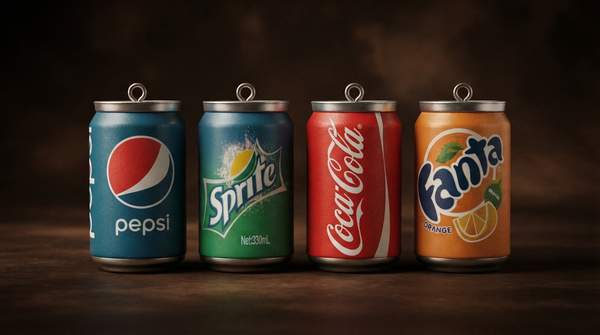
For many, the crisp fizz of a cold soda is a simple pleasure, but a growing awareness of sugar's health impact has complicated the choice. When you reach into the cooler, you're often facing a decision that goes beyond simple brand preference. The central conflict lies between traditional, full-sugar soft drinks and their "diet" or "zero sugar" counterparts. While a typical 12-ounce can of soda packs between 35 and 45 grams of sugar, the exact amounts vary, as do the potential health considerations of the artificial sweeteners used to replace that sugar. A closer look at three of the world's most popular soft drinks—Coca-Cola, Pepsi, and Sprite—reveals the specific trade-offs involved in this common consumer choice.
Soda Sugar Content and Flavor Comparison
When comparing the standard, full-sugar versions of these beverage giants, the two leading colas are remarkably similar in their high sugar content, while the popular lemon-lime alternative offers a significantly less sugary option. Data compiled by Caffeine Informer for a standard 12-ounce (355mL) can shows Pepsi leading with 41 grams of sugar, closely followed by Coca-Cola with 39 grams. A separate analysis by the public health campaign Rethink Sugary Drink, which measured slightly larger 375mL servings, found a nearly identical ranking: Pepsi Original contained 40.9 grams of sugar, and Coca-Cola had 39.8 grams. In stark contrast, the same analysis found that a 375mL serving of Sprite contains 25.9 grams of sugar, a noticeably lower amount.
These nutritional differences are matched by distinct brand identities and flavor profiles. Coca-Cola is an undisputed market leader, commanding a 48% market share in the United States in 2025. Its flavor is often described as a rich, classic cola with distinct hints of vanilla. Pepsi, its primary competitor, offers a similar caffeinated cola experience. Sprite, meanwhile, has carved out its own niche. As a caffeine-free option with a clean lemon-lime citrus flavor, it is often chosen by those looking for a refreshing alternative to the heavier cola taste.
| Soda Brand | Sugar per 12 oz / 375mL serving (grams) | Flavor Profile | Caffeine Content |
|---|---|---|---|
| Pepsi | 41g (12 oz) / 40.9g (375mL) | Cola | Contains Caffeine |
| Coca-Cola | 39g (12 oz) / 39.8g (375mL) | Rich cola with vanilla hints | Contains Caffeine |
| Sprite | 25.9g (375mL) | Lemon-lime citrus | Caffeine-Free |
The 'Zero Sugar' Solution
In response to public health concerns over high sugar consumption, virtually all major beverage manufacturers have developed zero-sugar versions of their flagship products. These drinks aim to deliver the sweetness consumers expect without the associated calories or sugar load. They achieve this by using high-intensity, non-nutritive sweeteners—substances that provide a sweet taste with little to no energy. Common examples found in popular diet sodas include aspartame, acesulfame potassium, and stevia. The proliferation of these "diet" and "zero" options presents a seemingly straightforward solution for those looking to reduce their sugar intake without giving up sweetened beverages entirely. However, the health implications of this swap are the subject of considerable scientific debate.
Health Questions Around Artificial Sweeteners
While diet sodas successfully eliminate sugar, the non-nutritive sweeteners they contain come with their own set of health questions. A review of scientific evidence found that, paradoxically, the routine consumption of beverages with these sweeteners is associated with an increased risk for some of the same health issues linked to sugary drinks, including type 2 diabetes, cardiovascular disease, hypertension, and stroke. Researchers note that there are plausible biological mechanisms that could explain these counterintuitive negative health effects, suggesting the body may react to intense sweetness in complex ways, regardless of calorie content.
It is crucial, however, to understand the limitations of this research. The scientific review emphasizes that these findings largely come from cohort studies, which track groups of people over time and can identify correlations but cannot definitively prove causation. The data does not directly inform us about cause and effect. For instance, individuals who regularly consume diet soft drinks often differ from non-consumers in other important ways; many have higher baseline body mass indexes and levels of adiposity to begin with. It's possible that people already at a higher risk for chronic diseases are more likely to choose diet drinks, which could skew the results. This complexity has led many public health experts to a broader conclusion: the most beneficial approach is likely a reduction in the intake of all sweeteners, whether they are caloric or non-caloric.
Choosing Your Carbonated Drink: Sugar vs. Sweeteners
The choice between a regular soda and its diet alternative is not a simple one between "bad" and "good," but rather a trade-off between different types of potential risk. The negative health consequences of excessive sugar consumption are well-established. Opting for a zero-sugar drink effectively removes that specific, known risk from the equation. However, it introduces the consumption of artificial sweeteners, which, according to some scientific studies, are associated with their own potential health concerns, even if the causal link remains a subject of investigation.
When choosing a carbonated soft drink, consider the trade-offs between high sugar content in regular sodas and the potential health implications of artificial sweeteners in diet versions. If your primary goal is to immediately cut calories and sugar, a diet beverage accomplishes this. If your concern is more focused on avoiding highly processed, artificial ingredients with uncertain long-term effects, then consuming a full-sugar soda in moderation—or better yet, choosing an unsweetened beverage—might be preferable. A consumer's choice of beverage, either a full-sugar soda or an artificially sweetened alternative, based on their understanding of the associated health contexts, is the most informed way to navigate the decision.


