That sudden, intense desire for a specific snack can feel powerful and frustrating, especially when it seems to derail your intentions for healthy eating. But food cravings are not a simple failure of willpower. According to the Center for Healthy Eating and Activity Research (CHEAR) at UC San Diego, cravings are a complex phenomenon driven by a combination of biological, psychological, and environmental factors. Understanding which of these is pulling the strings is the first step toward building lifestyle habits that allow you to respond intentionally rather than reactively.
Contrary to popular belief, cravings are rarely a sign that your body needs specific nutrients. One academic review noted that even during pregnancy, when the body has increased energy and nutrient needs, the types of foods craved don't typically differ from usual cravings. Similarly, perimenstrual chocolate cravings often continue after menopause, which makes a purely hormonal explanation unlikely. Instead, science points to a sophisticated interplay between your brain's reward systems, your emotional state, learned habits, and the world around you. By identifying the primary driver behind a particular urge, you can move beyond fighting your cravings and learn to understand and redirect them.
Diagnosing Your Craving: Biological, Psychological, or Environmental?
To effectively manage a craving, it helps to first understand its origin. Most cravings can be traced back to one of three main categories: the chemistry in your brain and body, the patterns in your mind and habits, or the cues in your immediate surroundings. Recognizing the signs of each can help you pinpoint the source of your urge and choose a more effective response.
Biological Drivers: Your Brain and Body's Influence
At a fundamental level, many cravings are rooted in your brain's reward system. Harvard's T.H. Chan School of Public Health explains that certain "hyperpalatable" foods—those high in enjoyable qualities like sweetness, saltiness, or richness—can activate neurons in the brain's reward region, creating intense feelings of pleasure. This process involves the neurotransmitter dopamine, which reinforces the motivation to seek out these foods again. Your brain essentially learns to associate these snacks with a positive feeling, driving you to repeat the experience.
Neurotransmitter levels also play a direct role. For instance, a drop in serotonin is often associated with a stronger desire for carbohydrates, as eating them can temporarily elevate serotonin levels and improve mood. Hormones that regulate appetite, such as ghrelin, can also amplify cravings when they are out of balance, making it more challenging to maintain a balanced diet.
Psychological Drivers: Emotions, Stress, and Habits
Your mental and emotional states are powerful craving triggers. Stress, in particular, can significantly intensify the desire for certain foods, as can other emotional cues. The Center for Healthy Eating and Activity Research highlights that many eating behaviors are driven by these feelings, turning specific foods into a source of comfort or a coping mechanism. This is why you might find yourself reaching for a familiar snack when you feel sad, anxious, or bored.
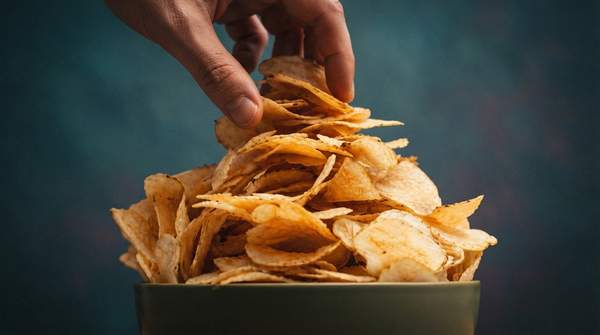
Memory and learning are also crucial in forming these psychological links. Over time, we can develop learned associations that connect eating with specific activities or contexts. A craving for potato chips while watching late-night television is a classic example of a learned behavior that has become a habit. These are not random urges but conditioned responses that have been reinforced over time, making the craving feel automatic in that particular situation.
Environmental Drivers: External Cues and Context
Sometimes, a craving isn't generated internally at all but is sparked by your environment. The sight of a candy bowl in the office break room, the smell of a bakery, or even scrolling through food posts on social media can trigger a powerful desire to eat. Research has shown that exposure to food-related cues can increase heart rate, gastric activity, and salivation, firing up the reward pathways in the brain before you even take a bite.
In the modern world, these cues are everywhere. According to CHEAR, increased screen time exposes people to a higher volume of food advertising, which can directly trigger cravings for commonly advertised snacks. Harvard's Nutrition Source points to other modern triggers like watching television cooking shows or online "mukbang" videos, where people eat large quantities of food. These external prompts can create a craving where none existed moments before.
Targeted Strategies for Managing Cravings
Once you have an idea of what's driving your craving, you can choose a strategy designed to address that specific trigger. Rather than relying on willpower alone, this targeted approach focuses on lifestyle modifications that support your body and mind. The goal is not to eliminate cravings entirely but to respond to them more intentionally.
For Biological Cravings: Stabilize Your System
When your brain's reward system or fluctuating hormones are the primary driver, focus on stabilizing your body's internal signals. Eating balanced meals that include protein, fiber, and healthy fats can help regulate blood sugar levels, which in turn can reduce the intensity and frequency of cravings. This provides your body with steady energy, making you less susceptible to the sudden urges for a quick, sugary fix. Getting enough sleep is also crucial, as it helps regulate the hormones that control appetite and cravings.
For Psychological Cravings: Build New Associations
If your cravings are tied to emotions or habits, the key is to build new coping mechanisms and unlearn old patterns. Practices like mindfulness can help you recognize and sit with a craving without immediately acting on it, allowing you to understand the underlying emotion. Managing stress through physical activity or other relaxation techniques can also reduce the emotional trigger. For learned habits, Harvard researchers suggest it's possible to "unlearn" the behavior. This involves consciously avoiding the craved food in its associated context for an extended period, which can weaken and eventually break the automatic connection.
For Environmental Cravings: Curate Your Cues
For cravings sparked by external cues, modifying your environment is a highly effective strategy. This could mean taking a different route at the office to avoid the break room treats, unfollowing food-centric accounts on social media, or limiting your exposure to cooking shows and food advertising. By reducing your exposure to triggers, you give your brain fewer opportunities to activate the craving response. When a cue is unavoidable, a proactive strategy is to have healthy, appealing snacks readily available. This provides a positive alternative that can satisfy the urge to eat without derailing your health goals.
Empowered Choices: Managing Your Cravings Effectively
Snack cravings are not a personal failing but a normal part of human experience, driven by a complex web of signals from our brains, emotions, and environments. The most effective path to managing them is not to fight them with sheer force of will but to understand their origins. By taking a moment to consider whether your urge is rooted in your body's chemistry, a psychological pattern, or an external cue, you can respond with a targeted and more effective strategy.
The practical decision is to identify the primary driver of your snack craving (biological, psychological, or environmental) and apply a targeted, evidence-based strategy. Success can be measured by a reduction in the frequency or intensity of specific snack cravings after implementing tailored management strategies, leading to a greater sense of control over your eating habits and overall well-being.
Sources
- How to Outsmart Food Cravings With Science-Backed Tips — Center for Healthy Eating and Activity Research
- The Psychology of Food Cravings: the Role of Food Deprivation - PMC
- Why Do We Crave Certain Foods? The Science Behind Cravings — The Be Kind People Project
- Cravings • The Nutrition Source — The Nutrition Source - Harvard Chan School
- HEART
- Food Cravings: Why They Happen and What To Do — ZOE