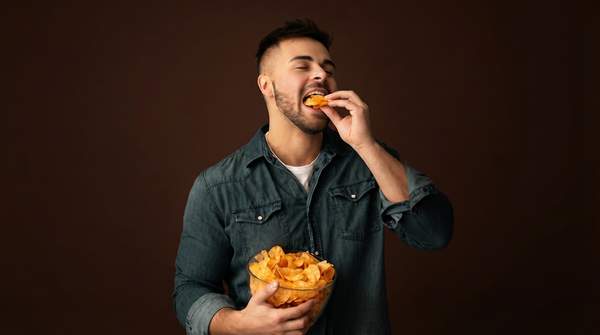
Texture doesn't just accompany flavor — it actively shapes it. When you bite into a potato chip, spoon into a thick dip, or sip a fizzy drink, the food's physical structure, the sound it makes, and the associations you've learned all work together to determine what you actually taste. Food scientists and experimental psychologists have traced these effects to three distinct mechanisms, and understanding them turns "mouthfeel" from a vague buzzword into a working model of your senses.
The Hidden Influence of Texture on Taste
Taste isn't a simple readout from your taste buds. As Charlotte Eye Ear Nose & Throat Associates' voice and swallowing specialist Dr. Brett Heavner explains, perceived taste combines input from those buds with our sense of smell — and, just as importantly, with mouthfeel, meaning how food literally feels in the mouth as we eat it. Mouthfeel spans crispness, cohesiveness, graininess, smoothness, viscosity, and fattiness.
What makes texture scientifically interesting is that it operates through multiple channels at once. Griffith Foods, a food ingredients company, notes that texture influences flavor perception by affecting how flavor compounds are released and perceived — a process that begins with visual expectation and continues through bite resistance, sound, and breakdown in the mouth. In other words, texture is not one influence among many; it is the framework that governs when and how strongly flavor reaches your senses.
Mechanism 1: Physical Breakdown and Flavor Release
The first mechanism is purely physical: a food's structure controls the rate at which flavor and aroma compounds escape it during chewing. The thickness of some foods slows the rate at which flavor and aroma exit the food, according to the CEENTA account — which is why the same food, melted into a liquid, would taste much stronger. A dense, viscous dip holds its aromatic compounds hostage; a thin version of the same recipe releases them immediately.
This is a matter of food matrix science. Research on gelatine-starch matrices, published in the journal Food Hydrocolloids and related literature, examines how the structural composition of a food governs flavor distribution and release during mastication — including how the structure of starch dispersions influences the kinetics of aroma release, a question studied by Lafarge and colleagues in the Journal of Food Science in 2008. The principle that emerges: flavor intensity and duration depend on how quickly the matrix breaks down and lets its volatile compounds reach your nose and mouth.
Mechanism 2: The Auditory Dimension of Texture
The second mechanism is one most people never suspect: you taste with your ears. Dr. Charles Spence, Professor of Experimental Psychology at Oxford University and head of the Crossmodal Research Laboratory, has built a field he calls gastrophysics — "the science of the perception of food" — around questions like this. His 2014 "sonic chip" experiment, which won an Ig Nobel Prize, showed in essence that loud chips taste better.
The details are striking. When Spence's team increased the volume of the crunch sound through headphones while participants ate Pringles, the chips were believed to be 15 percent crunchier and fresher. He found a similar effect with carbonation: people give fizzy drinks higher ratings when the sound of bubbles popping in their mouths is loud and fast. The crunch itself hadn't changed — only its soundtrack — yet perceived freshness and tastiness moved with the volume knob.
Mechanism 3: Psychological Associations and Learned Expectations
The third mechanism lives in your memory rather than your mouth. We are conditioned to equate crisper food with fattier or saltier foods — qualities we're trained to want — which, per the CEENTA account, is one reason soggy and mushy food is unappealing to so many people. The flavor may be chemically identical; the expectation is not.
Roughness carries its own learned meaning. Sour candy is coated in rough sugar because we perceive rougher foods as being sour — a texture cue that primes the palate before the first sour note lands. The same logic explains the near-universal dislike of flat soda: even when the taste and smell are the same as the fizzy version, the missing texture breaks the expected experience. Spence suggests there may even be an evolutionary echo at work, tied to our ancestors' reliance on foraging and the survival value of reading a food's condition through its texture.
The Three Pillars of Texture-Flavor Interaction
Use this framework the next time a snack surprises you: identify which mechanism is doing the work.
| Mechanism | How It Influences Taste | Example Snack Texture |
|---|---|---|
| Physical flavor release | Thickness slows the rate at which flavor and aroma exit the food; the same food melted into a liquid would taste much stronger. The food matrix's structure governs how flavor compounds are released during chewing. | A thick, viscous dip releases flavor slowly; a thinner version of the same food tastes stronger. |
| Auditory feedback | The sound of eating is part of texture perception — louder crunch sounds made Pringles seem 15 percent crunchier and fresher, and loud, fast bubble sounds improved ratings of fizzy drinks. | Crispy/crunchy foods like potato chips; fizzy drinks with audible carbonation. |
| Psychological associations | Learned links between texture and quality: crispness is associated with fattiness and saltiness, roughness with sourness — which is why soggy food and flat soda disappoint despite unchanged chemistry. | Sugar-coated sour candy; flat versus fizzy soda. |
The diagnostic move is simple: ask whether the texture changed the release rate of flavor, the sound of eating, or your expectation of the flavor. A stale chip fails on all three counts — it releases flavor differently, sounds duller, and breaks the crispness-equals-freshness association — which is why staleness is so punishing to perception.
Snack Examples: Crispy, Thick, and Their Flavor Secrets
Put the model to work on real snacks. A potato chip is the auditory mechanism's poster child: its perceived freshness and tastiness rise with the loudness of its crunch, as Spence's headphone experiments demonstrated. The chip's brittle structure also serves the physical mechanism — it shatters instantly, releasing its salt and seasoning in one burst rather than a slow seep.
A thick dip or sauce shows the opposite profile. Its viscosity slows the exit of flavor and aroma compounds, so the same food in melted or liquid form would taste noticeably stronger. And a fizzy drink demonstrates that texture extends beyond solids: the popping of bubbles is both a physical sensation and an auditory cue, and when the sound is loud and fast, ratings go up — while flat soda, chemically identical in taste and smell, loses its appeal because the learned textural expectation has been violated.
Savoring Snacks: A Deeper Appreciation of Texture's Role
The practical payoff is a habit, not a fact: consciously observe and analyze the physical, auditory, and psychological aspects of snack texture during consumption to better understand and appreciate flavor perception. The measurable test of whether the model has clicked is simple — the reader can identify and articulate at least two of the three texture-flavor mechanisms at play when eating a common snack. Pick up a chip, listen to the crunch, and notice which pillar is holding up the flavor.
Sources
- How does texture affect taste? — Charlotte Eye Ear Nose & Throat Associates
- Griffith Foods - North America | The Growing Role of Food Texture in Today's Market
- Flavour distribution and release from gelatine-starch matrices - PMC
- Why Loud Food Tastes Better, and Other Reasons Texture Matters — Epicurious