The Buffalo wing has two origin stories, not one. The famous version credits Teressa Bellissimo, who on March 4, 1964, deep-fried leftover wings in a peppery sauce at Buffalo's Anchor Bar. The lesser-known version belongs to John Young, a Black restaurateur whose breaded, whole wings in tomato-based "mambo sauce" were drawing crowds at his Wings & Things restaurant in East Buffalo during the same era. Understanding both claims — and how the dish spread from a local bar snack to a national game-day staple — means abandoning the tidy tale of a single midnight invention.
The Contested Origins of the Buffalo Wing
By the 1980s, the Bellissimo family had become famous for supposedly inventing Buffalo wings, as Becky Little reported in a History.com account of the dish's disputed parentage. Yet local historians have increasingly drawn attention to John Young and the cooks who came before him, and the record shows that chicken wings were never an undiscovered food. The National Chicken Council notes that deep-fried wings had long been a staple of Southern cooking, and Buffalo's affection for the cut goes back well over a century: the Buffalo History Museum's research library has documented a Clarendon Hotel menu from July 1, 1857, listing an entrée called "Chicken Wings, fried," along with an 1894 chicken wing recipe published in the Buffalo Commercial Advertiser.
That context matters, because the popular narrative risks implying somebody stumbled upon an otherwise uneaten part of the bird. In reality, wings were familiar food in the African American community Young served, and the Anchor Bar's own account describes wings as a part of the chicken that "usually went into the stock pot for soup" — cheap, yes, but hardly unknown. The genuine innovation claimed by each camp is narrower and more interesting: a specific preparation, a specific sauce, and a specific moment when a humble cut became a sensation.
The Anchor Bar's Account: A Late-Night Snack
According to the Anchor Bar's own history, the story begins late on the evening of March 4, 1964, when Dominic Bellissimo was tending bar and a group of his friends arrived with ravenous appetites. Dominic asked his mother, Teressa, to prepare something for them. She deep-fried the wings and flavored them with a secret sauce, and the snack was an instant hit — people soon flocked to the bar to experience what the restaurant calls "this new taste sensation."
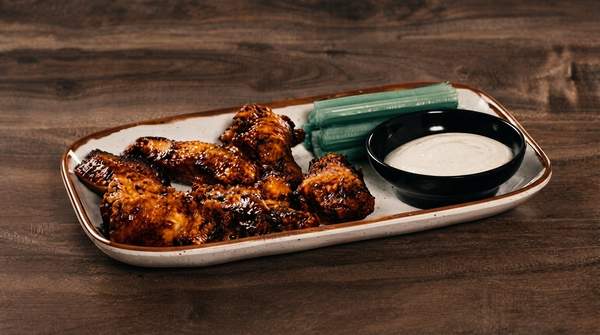
The National Chicken Council's version adds the details that would define the dish: Teressa Bellissimo, the bar's co-owner, cooked leftover wings in hot sauce as a late-night snack for her son and his friends, and the family put them on the menu the next day. Crucially, the wings were split into pieces and left unbreaded, then tossed in a peppery hot sauce and served with celery slices and blue cheese dressing — the accompaniments that became the standard presentation. The city of Buffalo itself eventually embraced the claim, issuing a 1977 proclamation honoring co-owner Frank Bellissimo and declaring July 29, 1977, Chicken Wing Day.
John Young's Claim: Breaded Wings with Mambo Sauce
About a mile away from the Anchor Bar, John M. Young (1935–1988) was running his own wing operation. According to the Buffalo History Museum, Young opened a restaurant called Wings & Things at 1313 Jefferson Avenue in 1966 — the first restaurateur to promote wings in the Buffalo telephone book — selling his wings ten for a dollar. His preparation was distinctly different: the wings were uncut, breaded, deep-fried, and served with his secret, tomato-based mambo sauce, a variation that Visit Buffalo Niagara notes is still served in some Southern restaurants.
Young's restaurant at Jefferson Avenue and East Utica was a popular spot throughout the sixties, until he left town in 1970. His wings were different enough from what we now call a Buffalo wing to constitute a separate category of chicken wing — but, as Visit Buffalo Niagara observes, he was serving wings at the same time as, if not before, the Anchor Bar. His contribution was formally acknowledged in 2013, when the National Buffalo Wing Festival inducted him into its National Buffalo Wing Hall of Flame. The honest conclusion is that Buffalo's wing history includes competing claims, and neither camp's account erases the other.
Comparing the Two Primary Buffalo Wing Origin Stories
Setting the two claims side by side shows exactly where they diverge — and where the historical record leaves room for both.
| Dimension | Anchor Bar Claim | John Young's Wings & Things Claim |
|---|---|---|
| Inventor | Teressa Bellissimo, co-owner, cooking for her son Dominic's friends | John M. Young, restaurateur and chef in East Buffalo |
| Location | Anchor Bar Restaurant, Buffalo, NY | Wings & Things, 1313 Jefferson Avenue, Buffalo, NY |
| Approximate Date | March 4, 1964 | Restaurant opened 1966; popular through the sixties until Young left town in 1970 |
| Wing Preparation | Split into pieces, unbreaded, deep-fried | Whole and uncut, breaded, deep-fried |
| Sauce | Peppery hot sauce (a "secret sauce" in the bar's telling) | Tomato-based "mambo sauce," his own secret recipe |
| Served With | Celery slices and blue cheese dressing | Mambo sauce as the signature accompaniment; sold ten for a dollar |
The comparison clarifies why both stories persist: they describe genuinely different dishes that happened to emerge in the same city within a few years of each other. The Anchor Bar version — split, unbreaded, hot-sauce-tossed, with celery and blue cheese — is the one that became the template for what the world now calls a Buffalo wing. Young's breaded, mambo-sauced whole wings followed a different culinary lineage, closer to Southern frying traditions, which is precisely why historians resist folding his story into the Bellissimo narrative or striking it from the record.
From Local Bar Snack to National Game-Day Staple
However the wings were born, their spread was swift and commercial. Throughout the 1970s and 1980s, Buffalo wings gained popularity as a bar food and appetizer across the United States and in Canadian border towns, and the dish's association with football and the Super Bowl turned it into a game-day ritual. The National Chicken Council frames the trajectory in industry terms: a late-night snack born in 1964 became a menu staple nationwide, with the Anchor Bar account serving as the founding myth most retellings adopt. The Bellissimo story won the branding war — the city proclamation, the fame by the 1980s, the name on the dish — while Young's claim survived in the memories of East Buffalo and, eventually, in the Hall of Flame induction that formally acknowledged his role.
The Enduring Legacy of Buffalo Wings
The Buffalo wing's journey from a regional bar snack to a national game-day staple demonstrates the power of culinary innovation, cultural adoption, and effective commercialization. For the reader deciding which origin story to believe, the evidence supports a both-and answer: the Anchor Bar's 1964 account is the most widely accepted and best documented, while John Young's breaded, mambo-sauced wings represent a parallel, contemporaneous claim that historians have worked to restore to the record. The measurable indicator of the dish's legacy is its continued widespread consumption during major sporting events and its presence on diverse restaurant menus — a benchmark you can check yourself the next time a game-day spread or a chain-menu lineup puts the wing, in its many sauced and breaded variations, front and center.