
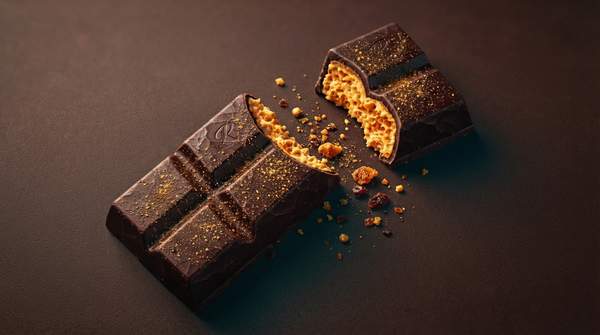
That deeply satisfying, sharp crack as you break off a piece of high-quality chocolate, followed by the velvety, luxurious sensation as it melts on your tongue, is no accident. It is the deliberate result of a meticulous scientific process. The physical and sensory attributes that separate a premium bar from a dull, waxy candy are rooted in the intricate crystallization of its most crucial ingredient: cocoa butter. Through a controlled heating and cooling technique known as tempering, chocolatiers guide these fat crystals into a single, stable structure that is engineered for the perfect snap and a precise, clean melt.
The Polymorphic Heart of Chocolate
At the core of chocolate's texture is the unique behavior of cocoa butter. According to food science resource Musim Mas, cocoa butter is polymorphic, meaning its fat molecules can crystallize and solidify into six distinct patterns, or forms. Each of these crystal forms has a different shape, density, and melting point, which dramatically alters the final chocolate's characteristics. A 2024 perspective paper on chocolate tempering notes that properties like snap, gloss, firmness, and sharp melting behavior all depend on this crystallization. Of the six possible forms, only one—known as Form V or the beta crystal—produces the desirable qualities of a well-crafted chocolate bar.
The other five forms are unstable and result in common chocolate flaws. Some melt below room temperature, while others create a texture that is too soft and melts too easily when handled. If left to crystallize on its own without intervention, cocoa butter will form a chaotic mix of these unstable structures, leading to a dull appearance, a crumbly or grainy mouthfeel, and a susceptibility to "fat bloom"—the unappetizing greyish streaks that can appear on the surface of poorly stored or improperly made chocolate.
Cocoa Butter Crystal Forms and Their Impact on Chocolate Quality
The transformation of liquid chocolate into a solid bar with ideal sensory qualities hinges on encouraging the formation of one specific crystal structure while eliminating the others. The properties of these different forms explain why precision is so critical in chocolate making.
| Crystal Form | Stability and Melting Point | Resulting Chocolate Characteristics |
|---|---|---|
| Form I & II | Highly unstable. According to Musim Mas, these forms melt below 24°C. | Produces a soft, crumbly chocolate that lacks snap and gloss and melts far too easily. |
| Form III & IV | Unstable. These forms melt too readily when handled. | Leads to a dull appearance and a waxy or grainy texture that does not melt cleanly in the mouth. |
| Form V (β2) | The ideal, stable form. It has a sharp melting point between 30.0–34.5°C. | Creates a glossy surface, a firm texture with a clean, sharp "snap," and a smooth, luxurious melt. This form also helps the chocolate resist fat bloom. |
| Form VI | The most stable form, but it takes weeks to develop and is undesirable. | Results in a hard, crumbly texture and is often associated with the long-term development of fat bloom. |
Tempering: A Precise Path to Perfection
To ensure only the desirable Form V crystals dominate the final product, chocolatiers employ the process of tempering. As described by Chuao Chocolatier, tempering involves carefully heating and cooling chocolate to achieve its most optimal chemical structure. This is not simply melting and cooling; it is a precise manipulation of temperature designed to build a uniform crystal network. The process generally involves three key stages. First, the chocolate is melted completely, often to 60°C for dark chocolate, to dissolve all existing fat crystals. This creates a blank slate, erasing any undesirable crystal structures.
Next comes precrystallization, where the chocolate is cooled under controlled stirring. This crucial step encourages the formation of stable "seed" crystals of Form V. Finally, the chocolate is gently reheated to a specific working temperature. This last step is designed to melt away any unstable crystals (Forms I through IV) that may have inadvertently formed during cooling, leaving only the stable Form V crystals intact. These remaining crystals then act as a template, causing the rest of the cocoa butter to solidify in the same perfect, uniform pattern as the chocolate sets.
The Science Behind the 'Snap' and 'Melt'
The distinct sensory experiences of a fine chocolate bar are a direct consequence of the successful formation of Form V crystals. The characteristic "snap" is the audible and tactile proof of a well-ordered crystal structure. When the cocoa butter solidifies into a dense, uniform network of Form V crystals, it creates a brittle, solid material that cracks briskly and cleanly under pressure. Untempered chocolate, with its jumble of unstable, weaker crystal forms, will bend or crumble instead of snapping.
The magic of the melt is a matter of thermodynamics. According to chocolate purveyor Cavasa, cocoa butter in its tempered form melts at approximately 34–35°C, just below the temperature of the human mouth. This precise melting point allows the chocolate to remain solid at room temperature and in your hand, yet melt in a "single, smooth wave" on the tongue. This clean melt releases the flavor compounds suspended within the fat evenly and completely, providing a rich, lingering taste. Poorly tempered chocolate, with its mix of crystals, melts unevenly, creating the waxy or grainy textures that disrupt the flavor experience.
Achieving the Perfect Chocolate Experience
The art of the chocolatier is deeply rooted in the science of fat crystallization. The glossy sheen, crisp snap, and smooth melt that define a premium chocolate bar are not subjective markers of quality but are measurable physical properties derived from a uniform structure of Form V cocoa butter crystals. To consistently find chocolate with these satisfying characteristics, consumers can seek out products from reputable makers known for their meticulous technique.
A chocolate bar that breaks with a clean, sharp sound and melts smoothly and evenly in the mouth, without a waxy or crumbly texture, indicates successful tempering and the presence of Form V crystals. This sensory feedback is the most reliable indicator that the chocolate in your hand has been crafted with a scientific understanding of how to achieve the perfect structure, turning a simple confection into a complex and satisfying experience.


