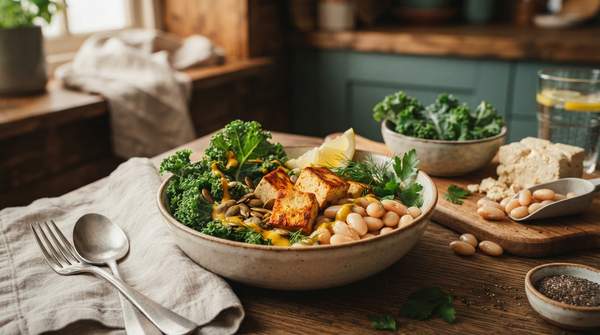
Here's the twist most calcium lists miss: it's not just how much calcium a plant-based food contains, it's how much your body can actually absorb. A serving of spinach may look impressive on paper, but naturally occurring compounds called oxalates bind much of that calcium before your bones can use it. Prioritize calcium-set tofu, kale, and fortified plant milks, treat almonds and sesame seeds as useful fair-ability backups, and don't lean on spinach or rhubarb for your calcium quota.
The Importance of Plant-Based Calcium for Bone Health
Bone health is where plant-based eating gets scrutinized hardest, and calcium is the nutrient under the microscope. A scientific review of foods for plant-based diets puts the point bluntly: more important than how much calcium is consumed is how much calcium is absorbed. Its authors recommend that plant-based consumers choose foods that are both rich in calcium and high in bioavailability, alongside fortified products, to avoid deficiency and maintain bone health.
Absorption isn't fixed, either. The same review notes that calcium uptake depends on physiological factors such as age, pregnancy, and lactation, plus dietary inhibitors or enhancers. In other words, two people eating the same kale salad don't necessarily bank the same calcium.
Understanding Calcium Bioavailability: Oxalates and Phytates
Two plant compounds do most of the absorption sabotage. Phytates and oxalates are, per the plant-based diet review, the most prominent inhibitors of calcium in plant foods. Oxalates bind calcium tightly in foods like spinach and rhubarb, while phytates, abundant in nuts, seeds, and legumes, reduce how much calcium the body takes up.
Dietitians Australia raises the stakes for vegetarians and vegans specifically: because plant-heavy diets mean more phytates overall, calcium needs may actually run higher than standard to compensate for the absorption penalty. The Vegan Society, meanwhile, flags vitamin D as a partner nutrient involved in calcium absorption, advising readers to follow its vitamin D guidance to optimize uptake.
Plant-Based Calcium: Bioavailability at a Glance
The framework below adapts The Vegan Society's absorbability classification, pairing each food group with the inhibitors responsible for its rating and a practical snack idea drawn from the dietary sources collected here. Use it to sort your snacks by what your body can actually use, not by label numbers alone.
| Plant-Based Food | Calcium Absorbability | Key Inhibitors (Oxalates/Phytates) | Snack Idea |
|---|---|---|---|
| Fortified foods (plant milks, yogurts) | Good | Minimal inhibitors; calcium is added during fortification | Fortified plant yogurt with berries |
| Calcium-set tofu | Good | None significant; calcium added during processing | Tofu scramble with kale |
| Kale, broccoli, Brussels sprouts, pak choi, cauliflower, watercress | Good | Low oxalate levels compared with other greens | Crunchy roasted kale chips |
| Almonds, sesame seeds, pinto beans | Fair | Phytates reduce absorption, but useful amounts still get through | Almonds with dried figs |
| Spinach, rhubarb | Poor | High oxalate content binds calcium | Enjoy for flavor and other nutrients, not as a calcium source |
The pattern to notice: the "good" tier works either because the calcium is added to the food (fortification, calcium-set tofu) or because the plant itself is naturally low in oxalates (the cruciferous and low-oxalate greens). The "fair" tier supplies real calcium that phytates only partially intercept. The "poor" tier is where label counts deceive.