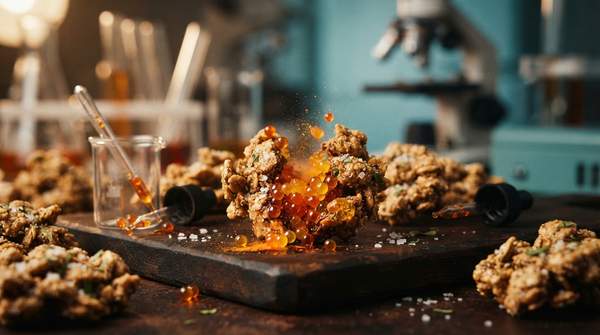
Flavor encapsulation is the food industry's trick for locking tiny droplets of flavor inside edible shells so the taste survives manufacturing and arrives in your mouth at exactly the right moment. The core idea is simple: trap a flavor compound in a protective coating of starch, protein, or gum, and that coating becomes a barrier against heat, moisture, and oxygen while doubling as a timer that decides when the flavor escapes. That dual job—protection and controlled release—is why your chewing gum's mint lasts, your snack seasoning survives frying, and your sour candy delivers that sharp "pucker" on cue.
What is Flavor Encapsulation?
At its most basic, flavor encapsulation means trapping food-grade flavor ingredients inside a protective coating made from natural, edible materials like starch, proteins, or gums. Flavor houses describe this coating as a shield: it stands between delicate, volatile flavor compounds and the outside world, keeping the flavor stable and potent even under challenging storage conditions. Without that shell, many flavor molecules would evaporate, oxidize, or react away before the product ever reached a shelf.
The technology serves two masters at once. For the manufacturer, it keeps flavors fresh and consistent from production line to consumption. For the consumer, it means the same vibrant taste throughout the product's shelf life—and, increasingly, a more interesting eating experience, since encapsulation lets designers choreograph when and how flavors appear during a bite.
Protecting Flavor: The Barrier Against Degradation
Flavors are fragile. Three environmental culprits do most of the damage: heat, moisture, and oxygen. Heat drives off volatile aroma compounds—the very molecules that carry most of what we perceive as flavor. Moisture and humidity trigger premature release or degradation during storage. Oxygen slowly oxidizes sensitive compounds, dulling intensity week by week. A scientific review of flavor encapsulation techniques notes that the core purpose of the technology is enhancing the thermal and oxidative stability of flavors and overcoming their volatility limitations.
The encapsulating wall acts as a physical barrier against all three. In snacks, this matters enormously during processing: as flavor supplier RAPS explains, encapsulation ensures that taste components in snacks endure high-heat processes like extrusion or frying, maintaining their impact. For sauces or ready meals, it prevents acids or extracts from reacting too soon during production, allowing them to release their effect precisely when desired, which contributes to balanced taste and product stability. Encapsulation also separates reactive ingredients from each other, preventing unwanted chemical interactions inside a complex formulation.
Controlled Release: Engineering the Taste Experience
Protection is only half the story. The coating can also be engineered to break open on cue, and food designers use several distinct triggers. Mechanical pressure is one: some flavors release only when the product is chewed, delivering a burst at just the right moment. Moisture is another—contact with water or saliva dissolves a water-soluble shell, which is why dry mixes and instant beverages can hold flavor dormant until liquid arrives.
Time-based release is the third lever. Encapsulated flavors can be released gradually during consumption, extending the taste experience and avoiding the rapid flavor fade that plagues non-encapsulated products. RAPS describes coated acids that create "targeted sour bursts or layered acidity profiles," adding freshness and multi-sensory effects without disturbing the base product during processing. The same logic lets a snack deliver an immediate hit of seasoning followed by a slower, lingering note—two experiences from one particle.
Flavor Encapsulation: Goals, Mechanisms, and Applications
The table below maps the main challenges and goals of encapsulation to the mechanisms that achieve them. Use it as a decoder ring: knowing how a product is processed and how its flavor behaves in your mouth tells you which strategy is probably at work.
| Goal / Challenge | Mechanism | Release Trigger | Example Application |
|---|---|---|---|
| Survive thermal processing | Heat-resistant shell shields volatiles during baking, frying, or extrusion | Not applicable—protection during manufacture | Snack seasonings that survive frying; bakery flavors that endure the oven |
| Prevent oxidation | Barrier against oxygen preserves flavor integrity | Not applicable—shelf-life protection | Long-shelf-life packaged snacks and dry goods |
| Resist moisture in storage | Coating blocks humidity-driven degradation | Not applicable—storage stability | Dry mixes and instant beverages |
| Flavor burst on demand | Frangible capsule ruptures under force | Pressure (chewing) | "Sour bursts" in candies and coated-acid snacks |
| Extended taste experience | Slowly dissolving or partially permeable shell | Time / gradual dissolution | Chewing gum and confectionery with long-lasting flavor |
| Targeted release on hydration | Water-soluble coating stays intact until wetted | Moisture | Instant beverages and dry soup or sauce mixes |
| Prevent premature reactions | Physical separation of reactive ingredients | Triggered by intended condition (e.g., cooking) | Acids and extracts in sauces and ready meals |
Reading the table as a diagnostic: if a flavor must survive a brutal process, the shell is chosen for stability; if the flavor must appear mid-bite, the shell is chosen for fragility. The same product often combines both—a heat-stable outer layer with a pressure-sensitive core.
Common Carrier Materials in Encapsulation
The wall material is where the engineering happens. Starches, proteins, and gums are the classic edible carriers, and their properties—solubility, melting behavior, mechanical strength—determine both how well they protect and how they release. A water-soluble gum suits moisture-triggered release in dry mixes; a tougher, heat-stable matrix suits baked or fried snacks. Academic reviews of the field describe a wider toolkit as well, including electrospinning and electrospraying, cyclodextrin inclusion complexes, coacervation, and yeast cell micro-carriers—each a different way of building the shell around the flavor.
Industry analysis points to ongoing innovation in clean-label carriers, driven by consumer demand for recognizable ingredients. The choice of carrier also shapes particle size and morphology, which in turn govern how uniformly the flavor disperses through a seasoning blend or beverage powder.
Applications in Snacks and Beyond
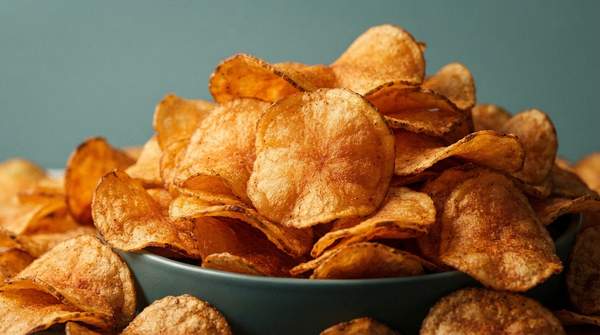
Snacks are the showcase category. Extruded snacks and fried products put flavor through genuine torture—high shear, high heat—so encapsulated seasonings are formulated to survive the fryer and then release on the tongue. RAPS's Flavocaps technology, for instance, is positioned for controlled and delayed flavor release that holds up in baking and frying processes, and the company frames encapsulation as a precision design tool across bakery, snacks, meat, dairy, and convenience applications.
Beyond snacks, market analysis identifies encapsulated flavors working across chewing gum and confectionery for controlled release, dry mixes for moisture protection, nutraceuticals for flavor masking, and instant beverages for uniform dispersion. The same technology also supports sugar and salt reduction: by improving taste efficiency, encapsulation lets manufacturers achieve the same sensory impact with less of the ingredient.
Choosing the Right Encapsulation for Your Product
Food developers should select encapsulation methods and carrier materials based on the specific processing challenges—heat, moisture, oxidation—the product will face, and the release profile they want consumers to experience, whether that is an immediate burst or a slow fade. The two questions to ask are: what will try to destroy this flavor before it reaches the mouth, and when should the flavor appear?
The measure of success is concrete: successful flavor stability and targeted release in new product formulations, as confirmed by sensory evaluation and shelf-life testing. If a formulation passes both—flavor intensity holds through processing and storage, and the release lands at the intended moment—the encapsulation strategy has done its job.
Sources
- Flavor Encapsulation Technology — Bell Flavors & Fragrances, Inc
- Sciencedirect
- RAPS: How encapsulation boosts flavor control in bakery, snacks & meat — Food Ingredients First
- Flavor Encapsulation Ingredients Market To 2035 — Indexbox