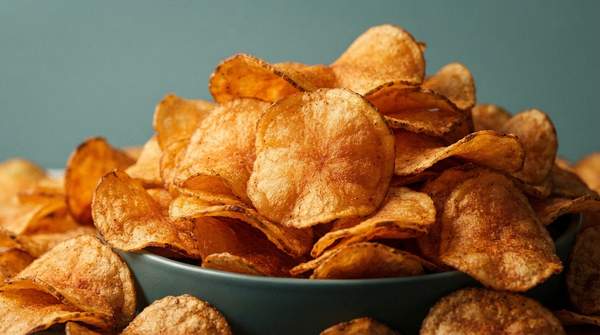
The satisfying snap of a potato chip and the hearty crack of a peanut are not the same sensation, and science can tell you why. The difference between "crispy" and "crunchy" is not just wordplay: the two textures come from measurably different physical structures, and those structures produce measurably different sounds. Crispy foods are light and brittle and emit high-frequency sounds when bitten; crunchy foods are dense and firm and emit lower-frequency ones. And the sound itself matters enormously—research shows that what you hear while chewing directly changes how fresh and crisp a snack tastes.
The Multisensory Appeal of Snack Crunch
Crunchy snacks hold a unique place in our affections, and not only for their taste. Texture specialists note that auditory input is highly important when eating, with sensory experts sorting the sounds of eating into "crispy," "crunchy," and "crackly" sensations, according to Lisa Duizer, a professor of sensory science at the University of Guelph. The sound of crunching significantly enhances enjoyment of foods like potato chips, and this auditory element keeps the eating experience stimulating.
Texture also drives satisfaction at the counter. Ingredient supplier Ingredion reports that 79% of consumers say texture influences their satisfaction, and 52% would reject food with poor texture. In other words, a snack that has gone soft can fail on texture alone, no matter how good its flavor is. Sound is a large part of that judgment: noisy foods are more enjoyable because of a psychological association between sound and freshness, as researchers studying snack acoustics have found.
Crispy vs. Crunchy: A Scientific Distinction
The core distinction is structural. Crispy foods are light and brittle; crunchy foods are dense and firm. A potato chip shatters into fragments the moment your teeth touch it, while a peanut resists and then gives way with a deeper report. The structure determines how the food fractures, and how it fractures determines what you hear.
Sensory scientists treat these as distinct categories of sensation rather than synonyms. When a brittle structure breaks, it releases a burst of acoustic energy dominated by higher frequencies; when a dense structure yields, the fracture produces a lower-pitched sound. That is why a lettuce leaf and a carrot both make noise when you bite them, but the noises belong to different acoustic worlds.
Crispy vs. Crunchy: A Scientific Comparison
The framework below maps the two sensations side by side, pairing each physical profile with its acoustic signature and typical examples. Use it to classify any snack in your pantry: if it is light, brittle, and high-pitched, it is crispy; if it is dense, firm, and low-pitched, it is crunchy.
| Attribute | Crispy | Crunchy |
|---|---|---|
| Physical structure | Light and brittle | Dense and firm |
| Sound frequency | High-frequency sounds (above 5 kHz) | Lower-frequency sounds (roughly 1–2 kHz) |
| Typical foods | Potato chips, lettuce | Peanuts |
According to research cited by Stable Micro Systems, which builds instruments for measuring food texture, crispy foods such as lettuce and potato chips typically produce high-frequency sounds above 5 kHz when eaten, while crunchy foods such as peanuts make sounds in a much lower range of 1–2 kHz. The examples anchor the pattern: the lighter the structure, the higher the pitch.
The Acoustic Signature: Sound Frequencies of Texture
Why the frequency difference? It comes down to how each structure fails. A thin, brittle crisp fractures almost instantly, and rapid, small-scale cracking events generate high-frequency acoustic energy. A dense peanut deforms before it breaks, and that slower, heavier fracture emits energy concentrated at lower frequencies. The frequency composition is therefore a direct readout of the food's physical structure—sound is the fracture made audible.
This is why the crispy/crunchy distinction is measurable rather than merely descriptive. Texture-measurement researchers point out that to control crunch, you must first measure it, and the acoustic record of a bite is one of the most informative measurements available.
How Sound Enhances Enjoyment and Perception
The most striking finding in this area comes from a study archived in the Oxford University Research Archive, conducted by Zampini and Spence. Participants bit into potato chips with their front teeth while rating crispness or freshness, and the researchers manipulated the sounds of the biting action itself. The chips were perceived as both crisper and fresher when the overall sound level was increased, or when high-frequency sounds in the 2 kHz–20 kHz range were selectively amplified—despite the chips themselves being unchanged.
As the study's authors put it, the results "highlight the significant role that auditory cues can play in modulating the perception and evaluation of foodstuffs," even though consumers are often unaware of the influence. The effect is not subtle: depending on the snack, crunching can reach 63 decibels—louder than a normal conversation at around 60 decibels, per reporting by Jake Rossen at Mental Floss. When that sound is missing, as with a soggy, muted potato chip, we grow suspicious of the food and turn to other senses, sniffing for signs of expiration.
Enhancing Snack Enjoyment Through Sound
Consumers can heighten their snack enjoyment by paying attention to the distinct auditory cues of crispy and crunchy foods. The evidence supports a simple experiment: listen to your next bite. A crisp, high-frequency snap signals a fresh, brittle structure; a low-frequency crack signals density and firmness. When the sound of eating is clear and appropriately loud, perceived freshness and satisfaction increase—the Zampini and Spence study showed the same chip rated as crisper and fresher when its high frequencies were amplified. The measurable indicator is increased perceived freshness and satisfaction when the sound of eating is clear and appropriately loud. If a snack has gone quiet, that muted sound is itself a freshness test your ears can run before your nose or eyes ever get involved.
Sources
- Crunch Factor: The Multisensory Science Behind Snack Appeal — Preparedfoods
- Crispy vs. crunchy: The science behind texture that sells — Ingredion
- The Science Behind Why We Crave Loud and Crunchy Foods — Mental Floss
- The science behind snack, crackle and pop — Stablemicrosystems
- The role of auditory cues in modulating the perceived crispness and staleness… — ORA